
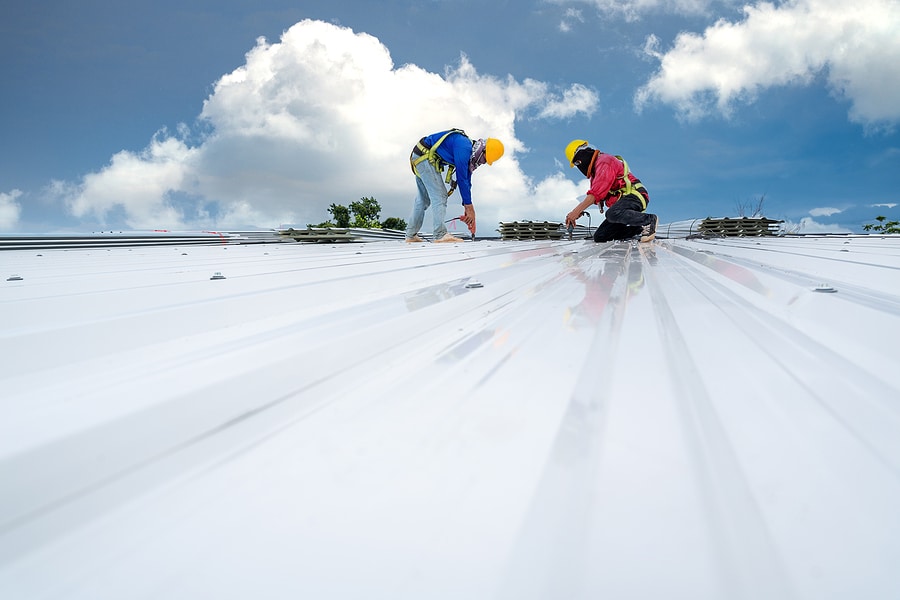
 PVC roofing membranes have a well-established track record as one of the most durable single-ply systems available for both commercial and residential flat and low-slope applications. The chemistry behind PVC roofing has been refined over decades, originating in Europe during the 1960s and continuously evolving to meet the performance demands of modern construction. The core compound, polyvinyl chloride, is engineered with plasticizers for long-term flexibility, stabilizers for UV resistance, reinforcing polyester scrim for dimensional strength, and protective surface coatings that extend the useful life of the membrane well beyond competing systems.
One of the defining characteristics of PVC roofing systems is the quality and permanence of their seam connections. Sheets are joined using hot-air welding equipment that fuses the overlapping membrane edges into a single, homogenous bond. Unlike adhesive or tape-based seaming methods, heat-welded PVC seams exceed the strength of the membrane itself, meaning the seam is not the weak point of the system. Automatic and manual hot-air welding tools allow installers to adjust for ambient temperature and humidity conditions, ensuring consistent seam integrity on every project, regardless of weather.
PVC membranes are also highly resistant to a wide range of chemicals, including grease, fats, and oils, making them the preferred choice for restaurants, food processing facilities, manufacturing plants, and any commercial building where rooftop HVAC equipment or kitchen exhaust systems are present. Standard TPO membranes can degrade over time when exposed to these substances; PVC does not. For building owners operating in these environments, the material choice is not a matter of preference; it is a practical requirement.
Installation flexibility is another strength of PVC roofing. Systems can be installed fully adhered, mechanically fastened, or ballasted, accommodating virtually any roof deck type, slope condition, or structural load constraint. Parapet walls, curbs, drains, and penetrations are all addressed using heat-weldable PVC flashings that integrate seamlessly with the field membrane. This eliminates the reliance on sealants and caulking at critical transition points, areas that typically require the most maintenance on competing systems.
The reflective white surface of PVC membranes provides meaningful energy performance benefits, particularly in Southern California’s climate. White PVC roofing reflects a significant portion of solar radiation, reducing heat transfer into the building and lowering cooling loads during peak summer months. The material meets Title 24 energy compliance requirements and is listed with the Cool Roof Rating Council (CRRC), which can be an important factor for both new construction permitting and commercial building owners managing energy costs.
Long-term maintenance of PVC roofing systems is straightforward. When properly installed, these membranes have demonstrated service lives in excess of 20 to 30 years. The material retains its manufactured properties without requiring periodic re-coating or re-surfacing. Should repairs become necessary due to punctures, cuts, or localized seam issues, corrections are made using the same hot-air welding process, with no specialized coating products or compatibility concerns. New penetrations and rooftop equipment additions are similarly accommodated by welding new PVC flashing collars directly to the existing membrane, maintaining the integrity of the waterproofing layer without compromise.
RC Roofing installs PVC roofing systems on a wide range of commercial, industrial, and residential flat-roof projects throughout San Diego. If you are evaluating PVC as a solution for your property, we are happy to walk you through the system options, membrane thickness selections, and attachment methods that are most appropriate for your specific roof and budget.